You Bought the Box. Where’s the Game?
GTA VI’s code-in-box physical edition forces a bigger question: what does “physical ownership” actually mean when the software is still delivered digitally?
Table of Contents
› Quick Take› Disc vs Code Ownership Matrix› The Case Is Not the Game› What Ownership Means Now› Bottom LineThe box is physical. The game delivery is not.
The practical difference is not shelf presence. It is what happens after purchase: installation, transferability, lending, resale and long-term access all behave differently when the product depends on a redeemable code.
| Ownership Question | Traditional Disc | Code in a Box | Digital Purchase |
|---|---|---|---|
| Physical object included | Yes | Yes | No |
| Game data delivered on physical media | Usually | No | No |
| Full console storage still required | Often substantial | Yes | Yes |
| After redemption, behaves like a digital license | No | Practically, yes | Yes |
| Collector/display value | High | Potentially high | None physically |
Still tangible. Still collectible. Still displayable.
The key that actually unlocks the software.
The console still needs the full digital game installed.
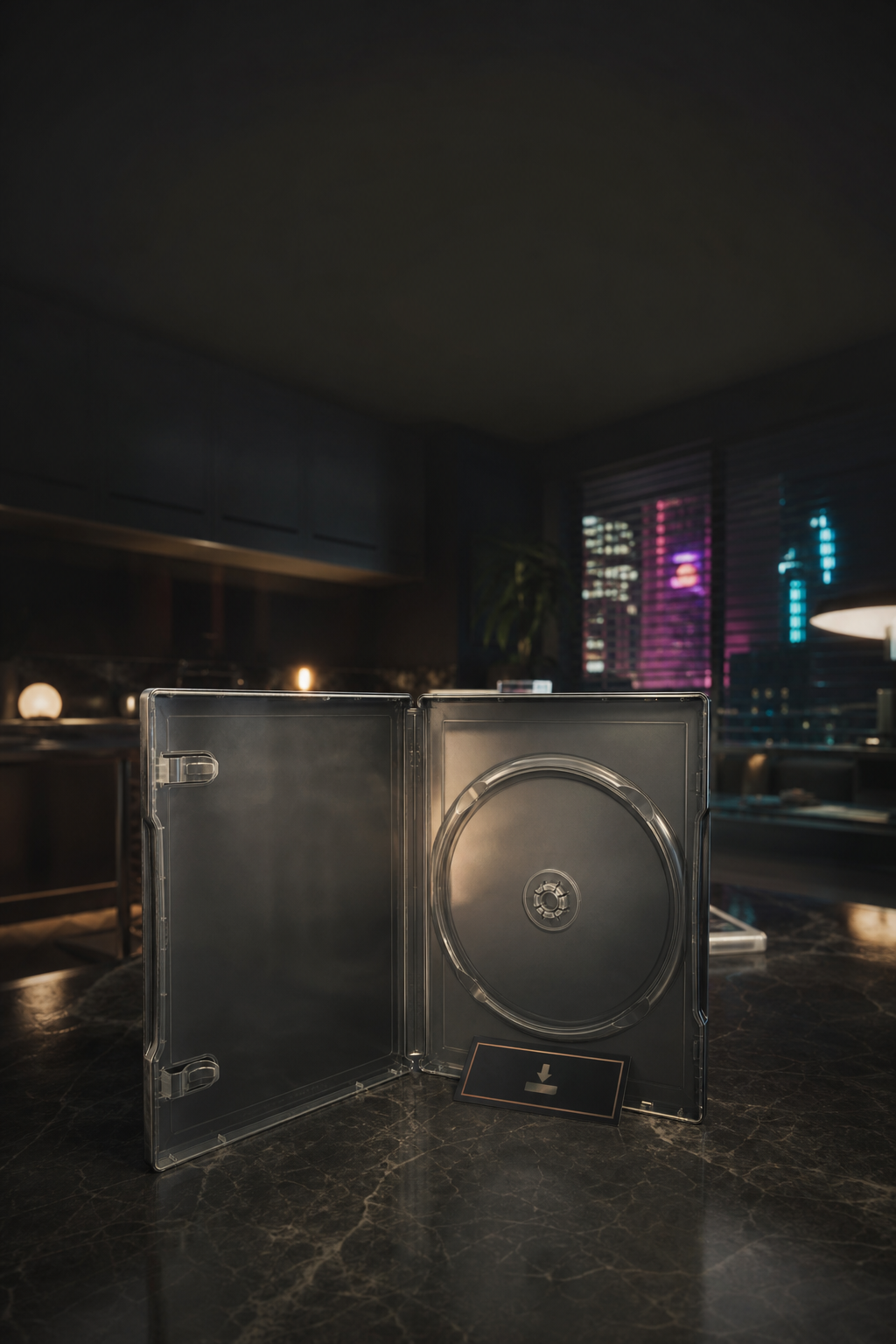
The Case Is Not the Game
On November 19, 2026, Grand Theft Auto VI will arrive on PlayStation 5 and Xbox Series X|S. But if you’re one of the players who prefer a physical copy, the package you’ll tear open will not contain a disc. Inside the box, you’ll find a download code. That’s it. No disc. No data. Just a plastic case, a piece of paper, and a promise.
Rockstar and Take-Two confirmed this in their official announcement. The physical edition is real—it exists, it has a box, and it has a code that lets you download the game. But the game itself never touches the disc. It never touches the box. It lives on your console’s storage drive, just like a digital purchase.
This isn’t a rumor or a leak. It’s the official word from the publisher. And it raises a question that’s been simmering for years: when a physical game contains no playable disc, what does physical ownership even mean?
The Box as a Collectible
Let’s be clear: the box is still a physical object. It has weight, it has art, it has that new-game smell. For collectors, that matters. A shelf lined with GTA cases is a statement. But the box is no longer the game. It’s a container, a piece of merchandise, a collectible that happens to come with a license to download.
Think about it this way: if you buy a collector’s edition statue, you don’t expect the statue to contain the game. The statue is a bonus. The game is separate. With GTA VI’s physical edition, the box is the bonus. The code is the game. And that’s a fundamental shift in what we’re paying for.
For decades, buying a physical game meant you owned a disc that contained the entire game. You could install it, play it, lend it, resell it, or keep it forever. The disc was the game. Now, the box is just a delivery mechanism for a download. The game itself is a digital file that you’ll have to download in full, even if you bought the physical edition.
The Storage Reality
Here’s the part that hits home for anyone who’s ever stared at a full hard drive: the physical edition still requires the full download. Rockstar confirmed that the physical version will be available on November 12, 2026, a week before launch, specifically to allow pre-loading. That means you’ll get your box, enter your code, and then download the entire game—likely 100GB or more—onto your console’s storage.
So, the physical edition doesn’t save you storage space. It doesn’t save you download time. It just gives you a box to put on your shelf. If you were hoping to avoid a massive download by buying physical, you’re out of luck. The game is the download, and the download is the game.
This is where the GearCheckpoint perspective kicks in: storage is no longer a digital-only concern. Physical buyers need the same amount of free space as digital buyers. And with GTA VI likely to be one of the biggest games of the generation, that means you’ll need to clear out your console’s SSD before launch day.
We’ve covered storage extensively, and the math is simple: if you’re on a base PS5 or Xbox Series S, you’re probably looking at deleting a few games to make room. If you’re on a Series X or PS5 Pro, you might have more breathing room, but still—GTA VI is going to be a monster.
What Does Ownership Mean Now?
Let’s get to the heart of it. When you buy a physical game, you’ve traditionally owned a disc. You could resell it, lend it to a friend, or trade it in. With a code in a box, those options are limited. The code is tied to your console account, and once it’s redeemed, it’s essentially a digital license. You can’t resell the code after redemption. You can’t lend it. You can’t trade it in.
Now, we’re not saying you don’t own the game. That’s a legal question that depends on the fine print of Rockstar’s license agreement, and we’re not lawyers. But the practical reality is that the physical edition behaves like a digital purchase. The box is a collectible, not a game.
This has implications for preservation, too. If you’re the kind of person who keeps games for decades, a disc is a stable medium. A code is a promise. If Rockstar’s servers go down in 20 years, will your code still work? Will the download still be available? These are open questions, and they’re not unique to GTA VI—but GTA VI is the biggest test yet.
The Industry Trend
Rockstar isn’t the first to do this, and they won’t be the last. Many PC games have been code-in-a-box for years. Some console games have shipped with partial downloads or required online activation. But GTA VI is the biggest game to go disc-free in its physical edition, and that’s a watershed moment.
It’s a sign that the industry is moving toward a future where physical media is a premium collectible, not a functional necessity. The box becomes a piece of art, a display item, a way to feel like you own something in an increasingly digital world. But the game itself is a service, a license, a download.
Is that a bad thing? Not necessarily. Digital games are convenient, and they don’t degrade. But it’s a change, and change is worth examining.
What This Means for You
If you’re planning to buy GTA VI, here’s what you need to know:
- The physical edition is available November 12, 2026, for pre-loading. The game launches November 19.
- You’ll need to download the full game, even if you buy physical.
- Make sure you have enough storage space. Check your console’s free space now, and consider an expansion option if you’re running low. For PS5, that means an M.2 NVMe SSD; for Xbox Series X|S, a proprietary expansion card.
- If you’re a collector, the box is still worth having. If you’re a player, digital might be just as good—and you’ll get the game at midnight without waiting for a delivery.
The Bottom Line
GTA VI’s physical edition is a box with a code inside. It’s a collectible, a piece of merchandise, a way to show your fandom. But it’s not the game. The game is a download, and that download is what you’ll be playing on November 19.
This is a moment to rethink what physical ownership means. It’s not about the disc anymore. It’s about the box, the art, the feeling of having something tangible. And that’s okay—as long as you know what you’re buying.
At GearCheckpoint, we’re not here to tell you whether physical or digital is better. We’re here to help you make an informed choice. And the choice is clear: whether you buy the box or go digital, you’re going to need storage. Lots of it.
So clear your drive, pre-load the game, and get ready for the next chapter. The box is just the beginning.
Displaying a physical collection?
If the box itself is becoming the collectible, a game-display shelf or media case is a more natural accessory than pretending the package saves storage space.
Check eBay OptionsAffiliate link. GearCheckpoint may earn a commission from qualifying purchases.
How Much Storage Will GTA 6 Need?
External SSD vs Internal SSD for GTA 6
GearCheckpoint Verdict
The controversy is not whether the box is real. It is whether the word “physical” still tells buyers anything useful about control, transfer and preservation once the software itself is delivered through a digital license.
Leave a Reply